The Consequences of Tooth Loss: Why a Gap in Your Smile Is Not Just an Aesthetic Problem
The consequences of tooth loss are not merely aesthetic. Discover how a gap in your smile affects your jaw, facial structure, and digestion — and what modern solutions are available.
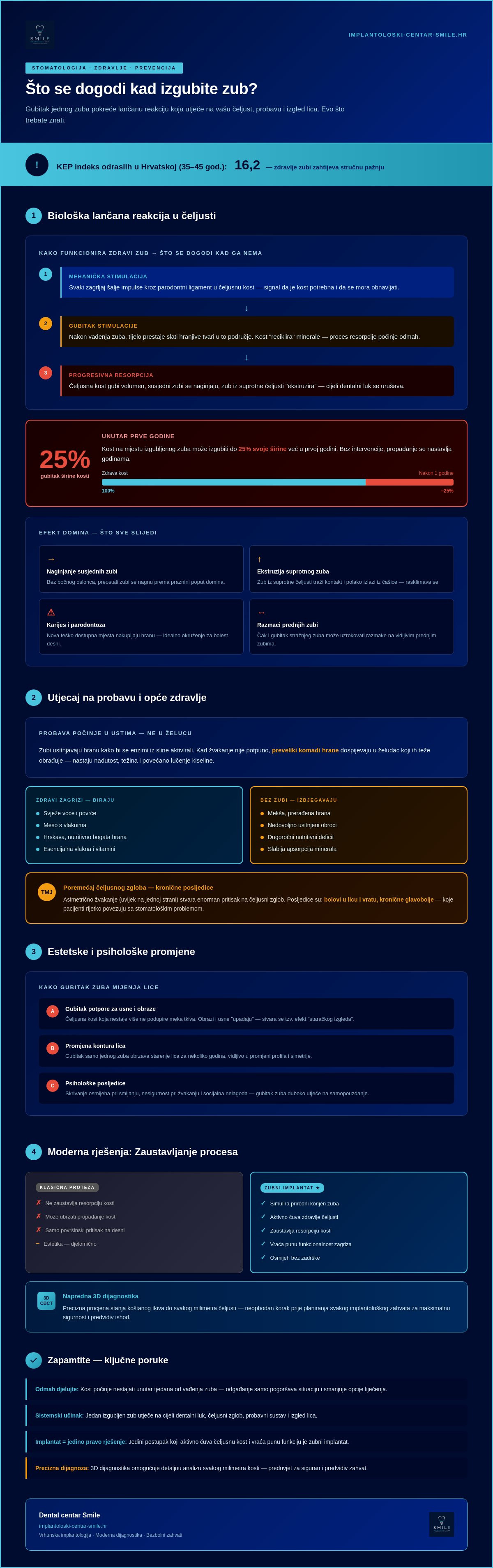
Jeste li znali da gubitak samo jednog zuba može promijeniti oblik vašeg lica i postarati vas za nekoliko godina brže nego što ste ikada zamišljali? Vjerojatno se slažete da je praznina u osmijehu često izvor velike nelagode, zbog čega skrivate lice pri smijanju ili osjećate nesigurnost dok žvačete omiljenu hranu. Ipak, posljedice gubitka zuba sežu daleko dublje od same estetike. Uzmemo li u obzir da odrasli u Hrvatskoj u dobi od 35 do 45 godina imaju visok KEP indeks od čak 16,2, jasno je da se radi o izazovu koji zahtijeva stručnu pažnju i razumijevanje.
U ovom članku saznat ćete kako gubitak samo jednog zuba pokreće lančanu reakciju koja utječe na vaše lice, probavu i dugovječnost čeljusne kosti. Razumijemo vaš strah od propadanja preostalih zubi, ali želimo vam pokazati da povratak funkcionalnosti ne mora biti stresan. Donosimo vam detaljan pregled rizika koje donosi odgađanje zahvata, uz informacije o modernim i bezbolnim rješenjima koja vraćaju snagu vašem zagrizu. Naš cilj je pomoći vam da kroz vrhunske metode ponovno otkrijete samopouzdanje i osigurate dugoročno zdravlje svog osmijeha.
Ključne Točke
- Otkrijte zašto nedostatak zuba uzrokuje povlačenje čeljusne kosti i kako tijelo "reciklira" tkivo koje više nema svoju funkciju.
- Saznajte na koji način otežano žvakanje opterećuje vaš probavni sustav i zašto nesvjesno počinjete izbjegavati zdravu, nutritivno bogatu hranu.
- Razumijte kako posljedice gubitka zuba mijenjaju konture vašeg lica, stvarajući efekt "staračkog izgleda" zbog gubitka potpore za usne i obraze.
- Informirajte se o modernim rješenjima poput zubnih implantata koji jedini uspješno simuliraju prirodni korijen i aktivno čuvaju zdravlje vaše čeljusti.
- Doznajte kako suvremena zubna protetika vraća potpunu funkcionalnost zagriza i omogućuje vam da se ponovno smijete bez imalo zadrške.
Biološka lančana reakcija: Što se događa u čeljusti nakon gubitka zuba?
Vaši zubi nisu samo alati za žvakanje; oni su aktivni dio živog sustava koji održava strukturu vašeg lica. Svaki put kad zagrizete, korijen zuba šalje mehaničke impulse u čeljusnu kost. Ti impulsi, koji putuju kroz parodontne ligamente, signaliziraju tijelu da je kost na tom mjestu potrebna i da je treba obnavljati. Čim taj prirodni stimulator nestane, započinje tiha, ali destruktivna lančana reakcija. Tijelo prestaje slati hranjive tvari u to područje, što pokreće procese koji trajno mijenjaju vašu anatomiju.
Resorpcija kosti: Zašto čeljust "nestaje" bez korijena zuba?
Resorpcija kosti je progresivni gubitak volumena i gustoće koštanog tkiva koji nastaje zbog prestanka funkcionalne stimulacije. To nije proces koji se događa preko noći, ali je neumoljiv. Tijelo je biološki programirano da bude učinkovito. Ako kost više ne osjeća vertikalni pritisak žvakanja, ono je počinje "reciklirati" i usmjeravati minerale u druge dijelove tijela. Unutar prve godine nakon vađenja, kost na tom mjestu može izgubiti i do 25% svoje širine.
Važno je razumjeti da klasične mobilne proteze ne zaustavljaju ovaj proces. One samo vrše površinski pritisak na desni, što ponekad može čak i ubrzati propadanje kosti. S druge strane, suvremeni zubni implantati funkcioniraju poput prirodnog korijena, čuvajući integritet čeljusti. Kako bismo precizno procijenili stanje vašeg koštanog tkiva, u našem centru koristimo naprednu 3D dijagnostiku koja nam omogućuje uvid u svaki milimetar vaše čeljusti prije planiranja zahvata.
Migracija zubi i urušavanje dentalnog luka
Gubitak jednog zuba slabi stabilnost cijelog niza. Susjedni zubi, koji su do tada imali čvrst bočni oslonac, počinju se naginjati prema praznom prostoru poput domina. Ovaj fenomen ne utječe samo na estetiku, već stvara ozbiljan poremećaj zagriza. Široke posljedice gubitka zuba uključuju i "ekstruziju" zuba iz suprotne čeljusti. Budući da taj zub više nema kontakt pri žvakanju, on polako počinje izlaziti iz svoje čašice tražeći otpor, što s vremenom dovodi do njegovog rasklimavanja.
Kada se zubi nagnu, stvaraju se novi, teško dostupni prostori u kojima se nakuplja hrana. To drastično povećava rizik od karijesa i parodontoze na preostalim zdravim zubima jer ih je gotovo nemoguće pravilno očistiti. Ovakvo urušavanje dentalnog luka može dovesti do pojave razmaka između prednjih zubi, čak i ako ste izgubili zub u stražnjem dijelu čeljusti. Pravovremena reakcija i kvalitetna zubna protetika ključni su za očuvanje stabilnosti cijelog sustava i sprječavanje daljnjih komplikacija.
Više od osmijeha: Utjecaj nedostatka zubi na probavu i opće zdravlje
Usta su ulazna vrata vašeg organizma, a svaki zub ima specifičnu ulogu u održavanju ravnoteže cijelog tijela. Znanstvena istraživanja, poput onih koja naglašavaju povezanost oralnog i općeg zdravlja, jasno pokazuju da problemi u usnoj šupljini ne ostaju izolirani. Kada nedostaje jedan ili više zubi, narušava se harmonija koja izravno utječe na vaš probavni sustav, ali i na neurološku stabilnost kroz kronične bolove u mišićima lica.
Problemi s probavom i apsorpcijom nutrijenata
Probava započinje u ustima, a ne u želucu. Mehanička obrada hrane je ključna prva faza u kojoj zubi usitnjavaju namirnice kako bi se enzimi iz sline mogli pravilno aktivirati. Kada su prisutne posljedice gubitka zuba, pacijenti često nesvjesno mijenjaju svoje prehrambene navike. Umjesto svježeg voća, povrća i mesa, biraju mekšu, često prerađenu hranu koju je lakše žvakati, što dugoročno vodi do nutritivnog deficita.
Ovakva promjena vodi do smanjenog unosa esencijalnih vlakana i vitamina. Želudac dobiva prevelike komade hrane koje teže obrađuje, što uzrokuje osjećaj težine, nadutost i pojačano lučenje kiseline. Vaše opće zdravlje izravno ovisi o tome koliko učinkovito vaše tijelo može izvući minerale iz hrane, a za to su vam potrebni funkcionalni i snažni zubi koji mogu odraditi svoj primarni zadatak.
Poremećaj čeljusnog zgloba (TMJ) i mišićna napetost
Nedostatak zubi s jedne strane čeljusti prisiljava vas da hranu žvačete isključivo na drugoj, funkcionalnoj strani. To asimetrično opterećenje stvara ogroman pritisak na čeljusni zglob (TMJ). S vremenom se javljaju bolovi u licu, vratu, pa čak i kronične glavobolje koje pacijenti rijetko povezuju sa stomatološkim problemima. Preostali zubi u takvom scenariju trpe dvostruki teret, što dovodi do njihovog ubrzanog trošenja, pucanja cakline i povećane osjetljivosti.
Često se kao sekundarna reakcija javlja i bruksizam ili noćno škripanje zubima. Mozak pokušava pronaći stabilan zagriz koji više ne postoji, što dodatno iscrpljuje mišiće lica. Kako bismo točno locirali uzrok vaših tegoba i provjerili stanje koštanih struktura, koristimo naprednu 3D CBCT dijagnostiku. Ona nam omogućuje precizan uvid u položaj zgloba, što je prvi korak prema trajnom rješenju i povratku ugode. Ako primjećujete napetost u čeljusti nakon jela, preporučujemo da dogovorite informativni pregled kako bismo na vrijeme spriječili daljnje narušavanje vašeg zdravlja.
Estetske i psihološke promjene: Kako gubitak zuba mijenja lice i samopouzdanje
Gubitak zuba nije samo praznina koju vidite u ogledalu; to je promjena koja izravno utječe na arhitekturu vašeg lica. Dok smo u prethodnim poglavljima objasnili biološko propadanje kosti, ovdje se fokusiramo na ono što svijet vidi. Široke posljedice gubitka zuba postaju najočitije kada pogledate svoj profil. Zubi pružaju ključnu potporu vašim usnama i obrazima, a kada taj oslonac nestane, meko tkivo lica počinje se urušavati prema unutra.
Preuranjeno starenje: Kolaps donje trećine lica
Kada čeljusna kost izgubi volumen, udaljenost između nosa i brade se smanjuje. To dovodi do efekta "staračkog lica", čak i kod mlađih osoba. Obrazi postaju upali, a brada dobiva istaknutiji, šiljastiji izgled. Donja usna se često stanjuje i povlači prema unutra, što licu daje strogu i umornu ekspresiju.
Mnogi pacijenti u ovoj fazi troše značajna sredstva na skupe kreme protiv bora ili estetske filere. Ipak, važno je razumjeti da kreme ne mogu riješiti problem koji potječe iz dubine čeljusti. Produbljivanje nazolabijalnih bora (onih koje idu od nosa prema kutovima usana) izravna je posljedica nedostatka koštane potpore. Tek kada se vrati izgubljeni volumen kosti i zuba, lice ponovno dobiva svoju prirodnu napetost i svježinu.
Emocionalni teret i kvaliteta života
Osim fizičkih promjena, gubitak zuba nosi i težak emocionalni teret. Poteškoće u izgovoru određenih glasova, poput "s", "z" ili "f", mogu stvoriti nesigurnost u svakodnevnoj komunikaciji. Mnogi ljudi se zbog toga počinju socijalno povlačiti, izbjegavajući obiteljska okupljanja ili poslovne sastanke. Strah da će okolina primijetiti nedostatak zuba ili da će se mobilna proteza pomaknuti u krivom trenutku stvara konstantan, tihi stres.
Povratak samopouzdanja kroz fiksna rješenja nije samo pitanje taštine, već ključ mentalnog zdravlja i vitalnosti. Kada se ponovno možete nasmijati punim plućima bez skrivanja lica rukom, mijenja se vaša cijela energija i pristup životu. Naš tim stručnjaka posvećen je tome da vam vrati ne samo funkciju, već i onaj autentični osjećaj sigurnosti u vlastiti osmijeh. Ako se prepoznajete u ovim promjenama, pozivamo vas da napravite prvi korak prema transformaciji i otkrijete kako vam moderna stomatologija može vratiti godine mladolikosti.
Moderna rješenja: Kako zaustaviti negativne procese i vratiti osmijeh
Iako su biološke i estetske promjene koje smo opisali u prethodnim poglavljima ozbiljne, dobra vijest je da suvremena stomatologija nudi rješenja koja u potpunosti zaustavljaju te procese. Danas više nije dovoljno samo "popuniti prazninu". Cilj nam je vratiti vam punu funkciju zagriza, spriječiti daljnje propadanje kosti i osigurati izgled koji je potpuno prirodan. Pravovremena reakcija ključna je kako biste izbjegli kompleksnije operacije, poput sinus lifta, koje su nužne kada se kost previše povuče.
Zubni implantati: Zlatni standard očuvanja zdravlja
Zubni implantati predstavljaju jedino rješenje u modernoj medicini koje ne nadomješta samo vidljivi dio zuba, već i njegov korijen. Izrađeni su od biokompatibilnog titana koji tijelo prihvaća kao vlastito tkivo. Kroz fascinantan proces oseointegracije, implantat srasta s vašom čeljusti, pružajući kosti potrebnu stimulaciju i zaustavljajući njezinu resorpciju.
Ovo je dugoročno najisplativija investicija jer, uz pravilnu higijenu, implantat može trajati cijeli život, za razliku od mostova koji zahtijevaju brušenje susjednih zdravih zubi. Ako vas zanimaju detalji o troškovima i različitim opcijama, pripremili smo koristan vodič na temu zubni implantati cijena koji će vam pomoći u donošenju informirane odluke. Za pacijente koji su izgubili sve zube u jednoj čeljusti, revolucionarna All-on-4 metoda omogućuje fiksni most na samo četiri implantata, vraćajući stabilnost i osmijeh u rekordnom roku.
Bezbolni zahvati uz modernu tehnologiju
Mnogi pacijenti odgađaju posjet stomatologu zbog straha od boli ili neugode. Razumijemo tu nelagodu i zato u našem radu koristimo blagodati svjesne sedacije. Ova metoda omogućuje vam da tijekom zahvata budete potpuno opušteni i smireni, dok mi precizno obavljamo svoj posao.
Poseban naglasak stavljamo na digitalno planiranje. Dok se u mnogim ordinacijama planiranje temelji na iskustvenoj procjeni, mi koristimo 3D CBCT dijagnostiku kako bismo točno procijenili stupanj štete koju su uzrokovale posljedice gubitka zuba. Ovaj uređaj nam omogućuje da vidimo gustoću kosti i položaj živaca u tri dimenzije, što znači da je zahvat maksimalno precizan, a oporavak minimalan. Uz vrhunsku podršku zubne protetike, svaki rad prilagođavamo vašoj unikatnoj fizionomiji. Nemojte dopustiti da vrijeme radi protiv vas. Spriječite daljnje propadanje kosti i vratite kvalitetu života koju zaslužujete pravovremenim pregledom i personaliziranim planom terapije.
Vrijeme je da svom osmijehu vratite snagu i vitalnost
Vidjeli smo kako posljedice gubitka zuba nadilaze estetski nedostatak i izravno utječu na strukturu vaše čeljusti, probavni sustav i emocionalno blagostanje. Odgađanje rješenja samo produbljuje biološku lančanu reakciju koja mijenja vaše lice, no važno je znati da nikada nije kasno za pozitivnu promjenu. Suvremena stomatologija danas nam omogućuje da procese poput resorpcije kosti ne samo zaustavimo, već i potpuno saniramo, vraćajući vam funkcionalnost i sigurnost koju zaslužujete.
Naš stručni tim, predvođen iskusnim implantolozima, koristi vrhunsku 3D CBCT dijagnostiku kako bi dobio precizan uvid u stanje vaše kosti i isplanirao najsigurniji put do novog osmijeha. Za pacijente koji osjećaju nelagodu, nudimo mogućnost zahvata pod svjesnom sedacijom, osiguravajući vam potpuno opušteno i bezbolno iskustvo. Ne dopustite da vas nesigurnost sputava u uživanju u hrani i slobodnom smijanju u društvu.
Rezervirajte termin za dijagnostički pregled i spriječite posljedice gubitka zubi. Tu smo da budemo vaš partner na putu prema potpunoj transformaciji i povratku autentičnog samopouzdanja. Vaš novi osmijeh čeka na vas.
Često postavljana pitanja o gubitku zubi
Što se događa s čeljusnom kosti odmah nakon gubitka zuba?
Čim zub nestane, čeljusna kost prestaje primati mehaničke impulse žvakanja, što pokreće proces resorpcije ili povlačenja kosti. Tijelo prestaje slati hranjive tvari u to područje jer ga više ne prepoznaje kao funkcionalno potrebno. Već unutar prvih 12 mjeseci nakon vađenja, kost može izgubiti značajan postotak svoje širine i gustoće, što kasnije može otežati ugradnju implantata bez dodatnih zahvata nadogradnje kosti.
Može li gubitak samo jednog zuba uzrokovati pomicanje svih ostalih zubi?
Da, gubitak samo jednog zuba može narušiti stabilnost cijelog dentalnog luka jer zubi prirodno teže popunjavanju praznog prostora. Susjedni zubi počinju se naginjati prema praznini, dok zub iz suprotne čeljusti može početi "izrastati" ili ekstrudirati jer više nema kontaktni otpor pri zagrizu. Ove promjene kvare prirodni poredak i stvaraju nove razmake između ostalih zubi, što otežava higijenu i povećava rizik od karijesa.
Kako nedostatak zubi utječe na izgled mog lica i bore?
Nedostatak zubi uzrokuje kolaps mekih tkiva lica jer usne i obrazi gube svoj prirodni unutarnji oslonac koji su pružali zubi i kost. Rezultat su upali obrazi i vidno produbljene nazolabijalne bore, što licu daje prerano ostarjeli i umoran izgled. Budući da su posljedice gubitka zuba izravno povezane s povlačenjem kosti, donja trećina lica se skraćuje, a brada postaje istaknutija, stvarajući profil koji kreme protiv bora ne mogu popraviti.
Je li moguće ugraditi implantat ako je prošlo puno vremena od gubitka zuba?
Ugradnja implantata je apsolutno moguća čak i godinama nakon gubitka zuba, no u takvim slučajevima često je potrebna prethodna priprema koštanog tkiva. Ako je došlo do značajnog povlačenja kosti, koristimo napredne tehnike augmentacije ili sinus lifta kako bismo stvorili čvrst temelj za novi zub. Naš tim koristi preciznu 3D dijagnostiku kako bi utvrdio točno stanje i predložio najsigurniju metodu rekonstrukcije vašeg osmijeha.
Koji su prvi znakovi da mi se zagriz mijenja zbog nedostatka zuba?
Prvi znakovi promjene zagriza uključuju učestalo nakupljanje hrane na mjestima gdje prije nije zapinjala te osjećaj neobjašnjive napetosti u čeljusnom zglobu. Možete primijetiti da vam zubi pri zatvaranju usta više ne sjedaju savršeno kao prije ili osjetiti lagano škljocanje pri žvakanju. Često se javljaju i posljedice gubitka zuba u obliku pojačanog trošenja preostalih zubi jer oni preuzimaju dvostruko opterećenje, što dovodi do njihovog pucanja i osjetljivosti.
Zašto obična proteza ne može spriječiti daljnji gubitak kosti?
Obična mobilna proteza leži isključivo na desnima i ne pruža unutarnju stimulaciju čeljusnoj kosti koju je nekada osiguravao prirodni korijen zuba. Zapravo, stalni pritisak baze proteze na meko tkivo može čak i ubrzati proces resorpcije kosti tijekom vremena. Jedino zubni implantati, zahvaljujući svojoj biokompatibilnoj vezi s kosti, simuliraju funkciju korijena i šalju impulse koji održavaju zdravlje, volumen i gustoću vaše čeljusti.
Članak napisao/la
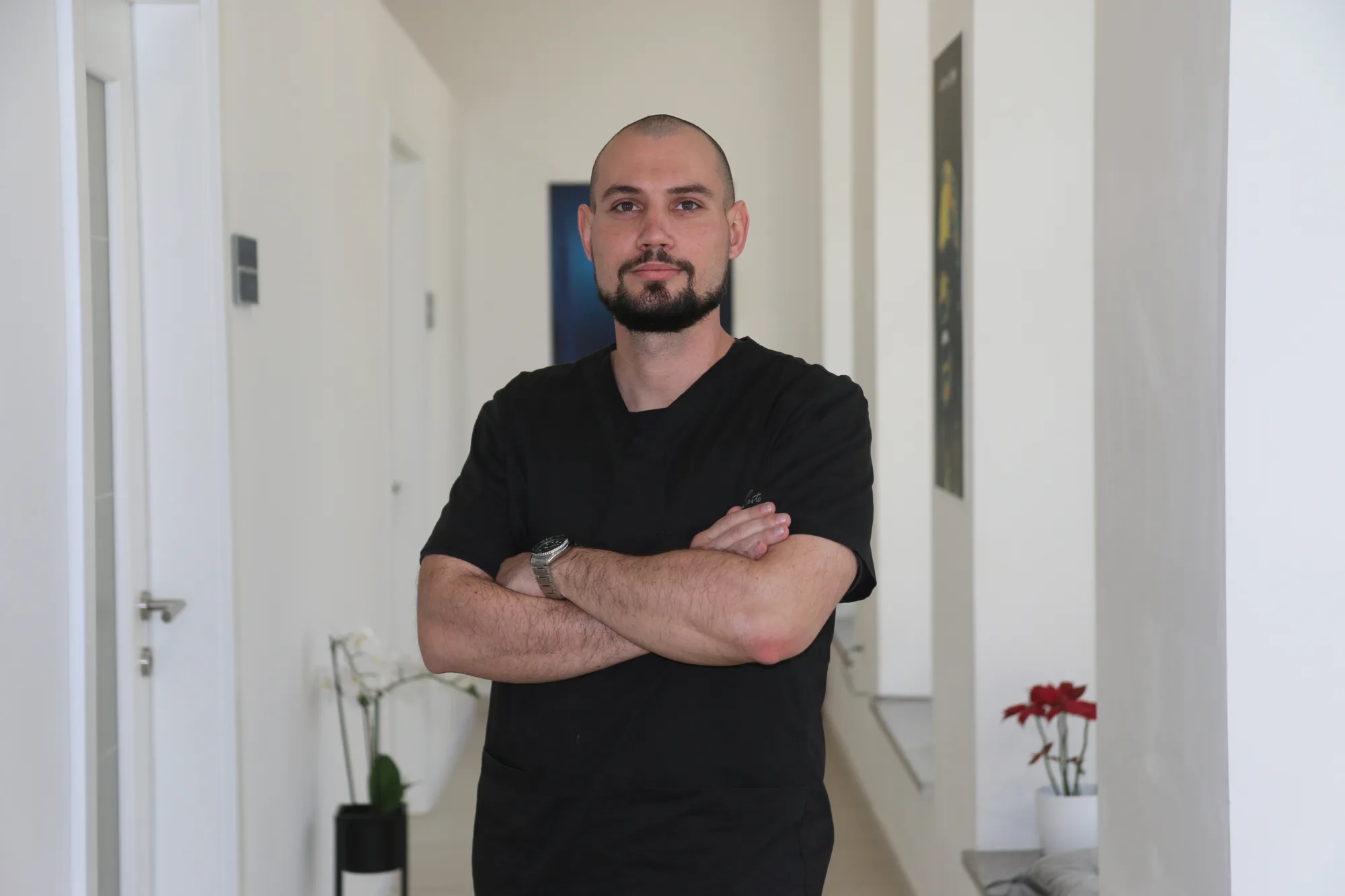
Zdravko Grnja
dr.med.dent. , rođen u Osijeku. Stomatološki fakultet završio u Osijeku.
Odricanje od odgovornosti
Ovaj sadržaj generiran je pomoću umjetne inteligencije. Iako težimo točnosti, potičemo čitatelje da provjere važne informacije. Sadržaj generiran umjetnom inteligencijom koristimo za povećanje učinkovitosti i pružanje određenih uvida, ali on možda ne odražava ljudsku stručnost ili mišljenja u potpunosti.
Frequently Asked Questions
Što se događa s čeljusnom kosti odmah nakon gubitka zuba?
Čim zub nestane, čeljusna kost prestaje primati mehaničke impulse žvakanja, što pokreće proces resorpcije ili povlačenja kosti. Tijelo prestaje slati hranjive tvari u to područje jer ga više ne prepoznaje kao funkcionalno potrebno. Već unutar prvih 12 mjeseci nakon vađenja, kost može izgubiti značajan postotak svoje širine i gustoće, što kasnije može otežati ugradnju implantata bez dodatnih zahvata nadogradnje kosti.
Može li gubitak samo jednog zuba uzrokovati pomicanje svih ostalih zubi?
Da, gubitak samo jednog zuba može narušiti stabilnost cijelog dentalnog luka jer zubi prirodno teže popunjavanju praznog prostora. Susjedni zubi počinju se naginjati prema praznini, dok zub iz suprotne čeljusti može početi "izrastati" ili ekstrudirati jer više nema kontaktni otpor pri zagrizu. Ove promjene kvare prirodni poredak i stvaraju nove razmake između ostalih zubi, što otežava higijenu i povećava rizik od karijesa.
Kako nedostatak zubi utječe na izgled mog lica i bore?
Nedostatak zubi uzrokuje kolaps mekih tkiva lica jer usne i obrazi gube svoj prirodni unutarnji oslonac koji su pružali zubi i kost. Rezultat su upali obrazi i vidno produbljene nazolabijalne bore, što licu daje prerano ostarjeli i umoran izgled. Budući da su posljedice gubitka zuba izravno povezane s povlačenjem kosti, donja trećina lica se skraćuje, a brada postaje istaknutija, stvarajući profil koji kreme protiv bora ne mogu popraviti.
Je li moguće ugraditi implantat ako je prošlo puno vremena od gubitka zuba?
Ugradnja implantata je apsolutno moguća čak i godinama nakon gubitka zuba, no u takvim slučajevima često je potrebna prethodna priprema koštanog tkiva. Ako je došlo do značajnog povlačenja kosti, koristimo napredne tehnike augmentacije ili sinus lifta kako bismo stvorili čvrst temelj za novi zub. Naš tim koristi preciznu 3D dijagnostiku kako bi utvrdio točno stanje i predložio najsigurniju metodu rekonstrukcije vašeg osmijeha.
Koji su prvi znakovi da mi se zagriz mijenja zbog nedostatka zuba?
Prvi znakovi promjene zagriza uključuju učestalo nakupljanje hrane na mjestima gdje prije nije zapinjala te osjećaj neobjašnjive napetosti u čeljusnom zglobu. Možete primijetiti da vam zubi pri zatvaranju usta više ne sjedaju savršeno kao prije ili osjetiti lagano škljocanje pri žvakanju. Često se javljaju i posljedice gubitka zuba u obliku pojačanog trošenja preostalih zubi jer oni preuzimaju dvostruko opterećenje, što dovodi do njihovog pucanja i osjetljivosti.
Zašto obična proteza ne može spriječiti daljnji gubitak kosti?
Obična mobilna proteza leži isključivo na desnima i ne pruža unutarnju stimulaciju čeljusnoj kosti koju je nekada osiguravao prirodni korijen zuba. Zapravo, stalni pritisak baze proteze na meko tkivo može čak i ubrzati proces resorpcije kosti tijekom vremena. Jedino zubni implantati, zahvaljujući svojoj biokompatibilnoj vezi s kosti, simuliraju funkciju korijena i šalju impulse koji održavaju zdravlje, volumen i gustoću vaše čeljusti.
