Laser Gingivectomy: A Modern, Less Painful and More Precise Method of Gum Contouring
Thanks to advances in dental technology, the laser has become one of the most sought-after methods in aesthetic dentistry and periodontology.
Što je laserska gingivektomija i zašto postaje sve popularnija?
Laserska gingivektomija predstavlja suvremeni stomatološki zahvat kojim se pomoću dentalnog lasera uklanja višak zubnog mesa (gingive) ili preoblikuje njegova kontura radi zdravstvenih i estetskih razloga. Zahvaljujući napretku dentalne tehnologije, laser je postao jedna od najtraženijih metoda u estetskoj stomatologiji i parodontologiji jer omogućuje preciznije rezove, manje krvarenja i brži oporavak u odnosu na klasične kirurške tehnike.
Pacijenti se za lasersku gingivektomiju najčešće odlučuju kada žele poboljšati izgled osmijeha, riješiti problem prekomjerno vidljivih desni ili liječiti određene parodontne probleme koji utječu na zdravlje usne šupljine.
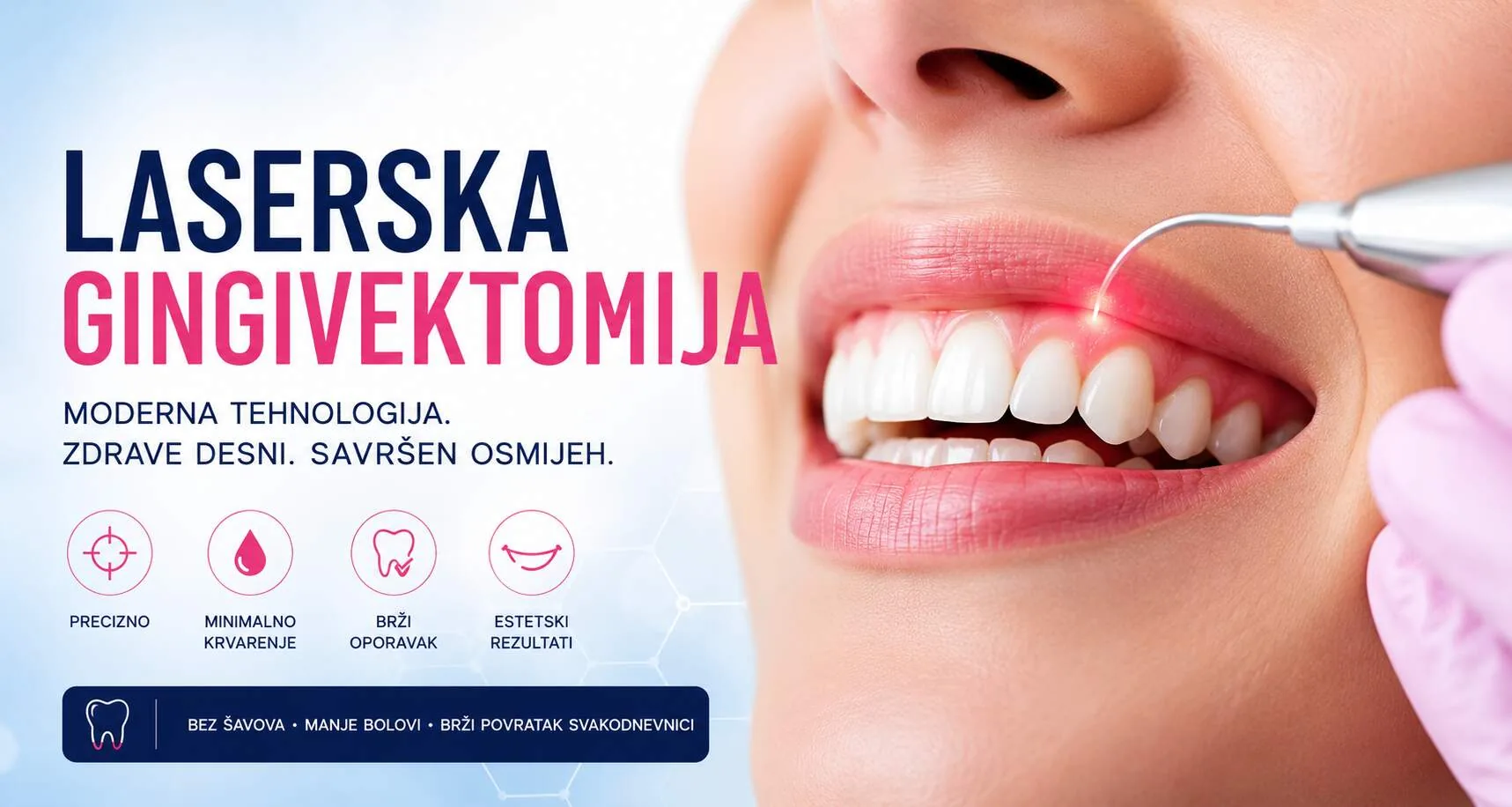
Što je gingivektomija?
Gingivektomija je stomatološki zahvat kojim se uklanja dio zubnog mesa. Cilj zahvata može biti:
uklanjanje upaljenog ili zadebljanog tkiva
smanjenje dubokih parodontnih džepova
estetsko oblikovanje linije desni
otkrivanje većeg dijela zuba
priprema za protetske ili estetske zahvate
Tradicionalno se gingivektomija izvodila skalpelom, no danas se sve češće koristi laser zbog brojnih prednosti koje donosi pacijentima i stomatolozima.
Laserska gingivektomija – kako funkcionira?
Tijekom zahvata stomatolog koristi specijalizirani dentalni laser koji emitira kontroliranu energiju za precizno uklanjanje mekog tkiva. Laser istovremeno reže i zatvara krvne žile, čime se značajno smanjuje krvarenje i potreba za šavovima.
Postupak se najčešće izvodi pod lokalnom anestezijom, a ovisno o opsegu zahvata može trajati od 15 do 60 minuta.
Koraci zahvata:
Klinički pregled i planiranje terapije.
Primjena lokalne anestezije.
Precizno uklanjanje viška gingive laserom.
Oblikovanje prirodne konture desni.
Završna kontrola i upute za oporavak.
U većini slučajeva pacijent može nastaviti sa svakodnevnim aktivnostima već isti dan.
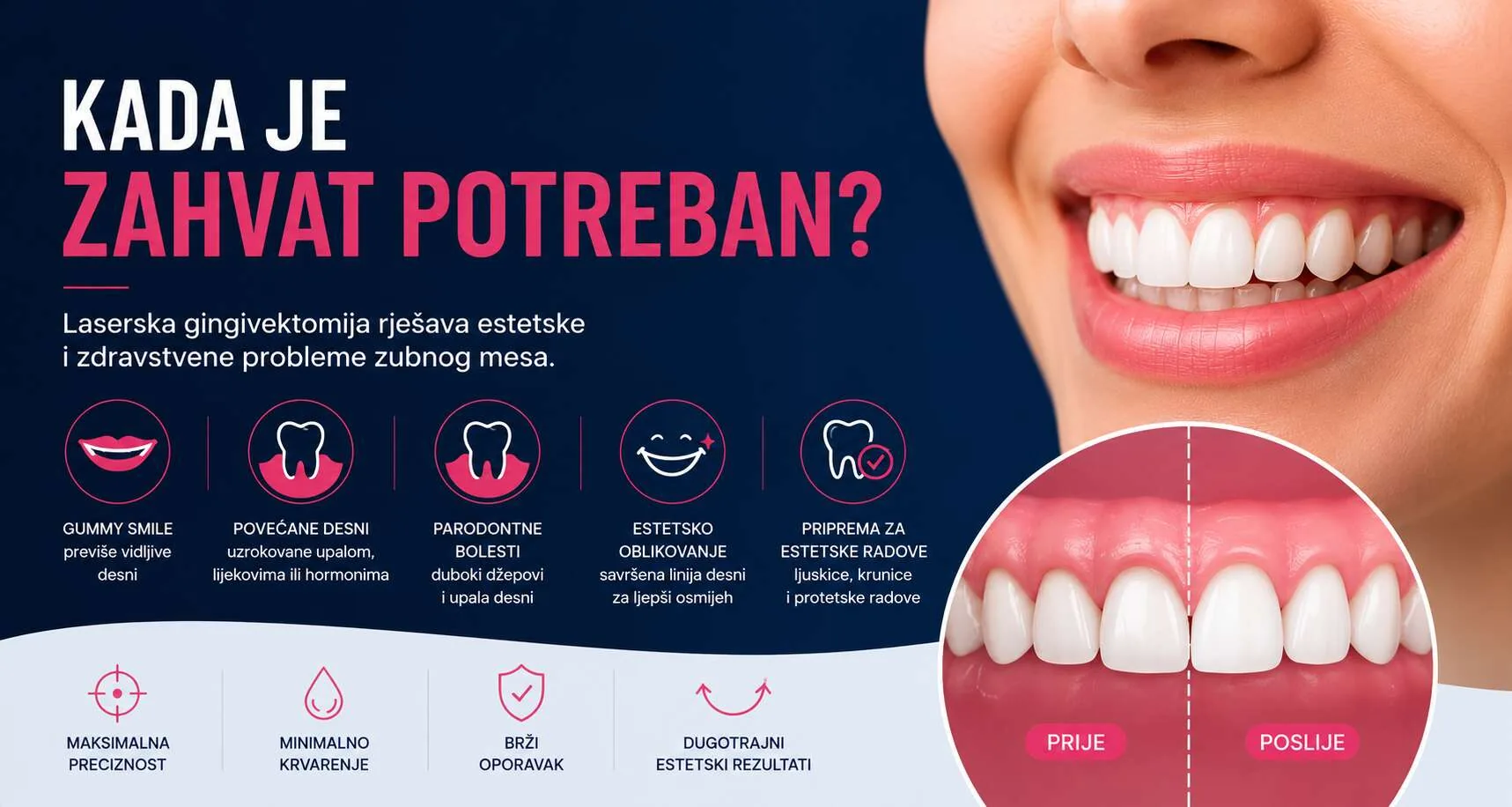
Kada se preporučuje laserska gingivektomija?
1. Gummy smile (previše vidljive desni)
Jedan od najčešćih razloga za zahvat je tzv. „gummy smile“ odnosno osmijeh kod kojeg se tijekom smijanja vidi prevelik dio zubnog mesa. Laserskim oblikovanjem desni postiže se uravnoteženiji i estetski privlačniji osmijeh.
2. Povećanje zubnog mesa
Određeni lijekovi, hormonalne promjene i kronične upale mogu uzrokovati povećanje gingive. Laserska gingivektomija omogućuje uklanjanje viška tkiva i vraćanje normalne anatomije.
3. Parodontne bolesti
Kod pacijenata s parodontitisom mogu se razviti duboki džepovi između zuba i desni. U određenim slučajevima gingivektomija pomaže u uklanjanju upaljenog tkiva i poboljšanju oralnog zdravlja.
4. Priprema za estetske zahvate
Prije postavljanja ljuskica, krunica ili estetskih ispuna ponekad je potrebno preoblikovati desni kako bi se postigao idealan estetski rezultat.
Prednosti laserske gingivektomije
Minimalno krvarenje
Laser tijekom rezanja zatvara krvne žile, što značajno smanjuje krvarenje tijekom i nakon zahvata.
Brži oporavak
Pacijenti uglavnom osjećaju manje nelagode nego kod klasične kirurške metode.
Veća preciznost
Laserska tehnologija omogućuje iznimno precizno uklanjanje tkiva bez oštećenja okolnih struktura.
Manji rizik od infekcija
Visoka temperatura lasera djeluje antibakterijski, smanjujući mogućnost razvoja infekcije.
Manje oticanja
Zbog manje traume tkiva oteklina je često minimalna ili potpuno izostaje.
Nema šavova
U većini slučajeva nisu potrebni kirurški šavovi.
Je li laserska gingivektomija bolna?
Jedno od najčešćih pitanja pacijenata glasi: „Boli li laserska gingivektomija?“
Tijekom zahvata koristi se lokalna anestezija pa pacijent ne osjeća bol. Nakon zahvata moguća je blaga osjetljivost ili nelagoda tijekom nekoliko dana, no većina pacijenata navodi da je oporavak znatno ugodniji u usporedbi s klasičnom kirurškom gingivektomijom.
Po potrebi stomatolog može preporučiti analgetike za kontrolu postoperativne nelagode.
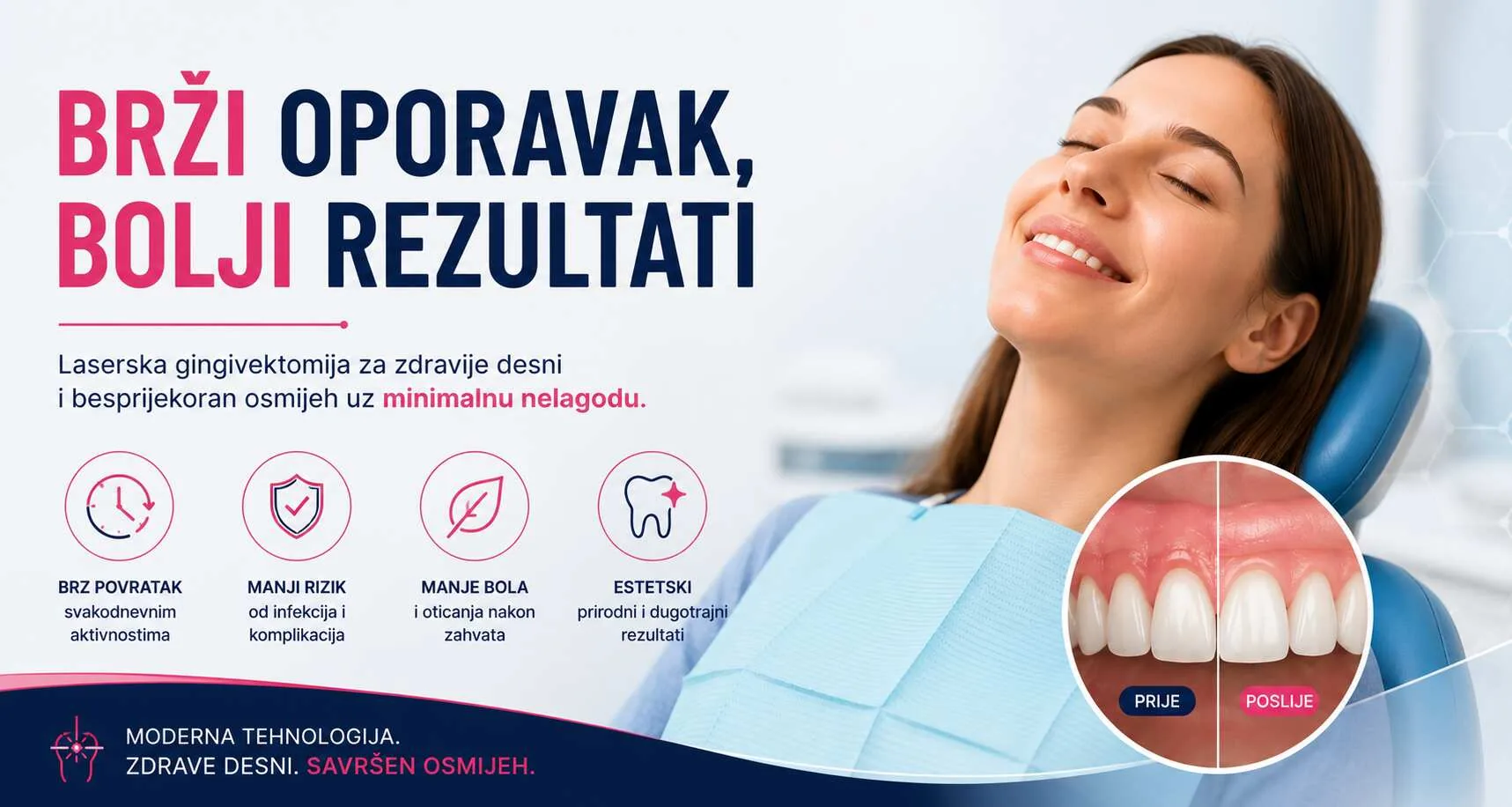
Oporavak nakon laserske gingivektomije
Proces cijeljenja obično je brz i jednostavan.
Preporuke nakon zahvata:
konzumirati mekšu hranu prvih nekoliko dana
izbjegavati izrazito vruću hranu i napitke
ne pušiti tijekom oporavka
održavati pravilnu oralnu higijenu
koristiti preporučene antiseptičke otopine za ispiranje
Većina pacijenata vraća se normalnim aktivnostima unutar 24 sata.
Potpuno cijeljenje desni može trajati nekoliko tjedana, ovisno o opsegu zahvata i individualnim karakteristikama pacijenta.
Koliko košta laserska gingivektomija?
Cijena laserske gingivektomije ovisi o:
broju zuba koji se tretiraju
složenosti zahvata
korištenoj laserskoj tehnologiji
iskustvu stomatologa
lokaciji ordinacije
U Hrvatskoj se cijene najčešće kreću od nekoliko desetaka do nekoliko stotina eura, ovisno o opsegu terapije. Za točnu procjenu potrebno je obaviti pregled i izraditi individualni plan liječenja.
Laserska gingivektomija ili klasična gingivektomija?
KarakteristikaLaserska gingivektomijaKlasična gingivektomijaKrvarenjeMinimalnoIzraženijePreciznostVrlo visokaVisokaŠavoviNajčešće nisu potrebniČesto potrebniOporavakBržiSporijiNelagodaManjaVećaRizik infekcijeNižiViši
Zbog navedenih prednosti laser je postao preferirani izbor kod mnogih pacijenata i stomatoloških stručnjaka.
Tko je kandidat za lasersku gingivektomiju?
Idealni kandidati su osobe koje:
imaju zdrave zube i potporne strukture
žele estetski poboljšati osmijeh
imaju povećanu gingivu
pate od određenih oblika parodontnih bolesti
žele minimalno invazivan zahvat s bržim oporavkom
Konačnu odluku donosi stomatolog nakon detaljnog pregleda i procjene stanja usne šupljine.
Najčešća pitanja o laserskoj gingivektomiji (FAQ)
Koliko traje zahvat?
Najčešće između 15 i 60 minuta.
Je li potrebna anestezija?
Da, zahvat se izvodi uz lokalnu anesteziju.
Mogu li odmah jesti nakon zahvata?
Preporučuje se pričekati dok anestezija ne prestane djelovati te konzumirati mekšu hranu.
Ostaju li ožiljci?
Laserska tehnologija omogućuje vrlo uredno cijeljenje uz minimalan rizik od vidljivih ožiljaka.
Jesu li rezultati trajni?
U većini slučajeva rezultati su dugotrajni, posebno uz pravilnu oralnu higijenu i redovite stomatološke kontrole.
Zaključak
Laserska gingivektomija predstavlja jednu od najmodernijih metoda oblikovanja i liječenja zubnog mesa. Zahvaljujući preciznosti, minimalnom krvarenju, kraćem vremenu oporavka i izvrsnim estetskim rezultatima, sve više pacijenata bira upravo ovu tehnologiju. Bilo da želite poboljšati izgled osmijeha, riješiti problem povećanih desni ili unaprijediti oralno zdravlje, laserska gingivektomija može biti sigurno, učinkovito i dugoročno rješenje.
